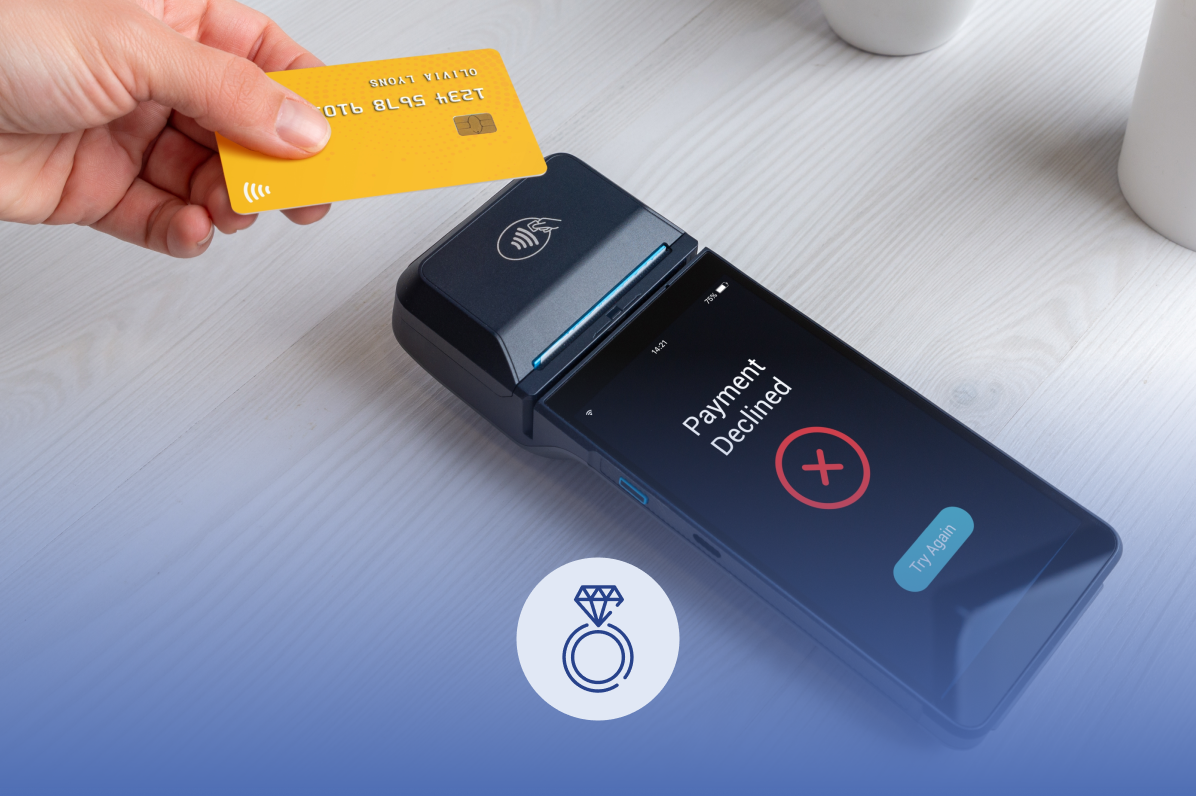
You watched it happen again this week. A customer picked out the sectional, sat down at the counter, and the application came back declined. They said they'd think about it. They walked. Nobody is coming back for that sofa.
This is the most expensive moment in your store, and most independent retailers are still handling it with one lender and an apology. Here is what the shops that stopped losing those sales are actually doing differently.
The decline isn't a credit problem. It's a routing problem.
When a single lender says no, that is one lender's risk appetite talking — not a verdict on whether your customer can pay. Roughly 41% of U.S. consumers now sit below a 700 credit score, and prime lenders have been tightening, not loosening. If your store runs one application to one lender, you have hard-coded a decline rate you cannot control.
The customer standing at your counter is the same customer either way. The only variable is how many places their application gets to go.
What "one lender" actually costs you
Run the math on your own floor. A single-lender setup typically approves somewhere in the 35% range. Across a full multi-tier stack, that number climbs past 85%. On high-ticket categories, as much as 45% of sales that die at the counter die from one credit decline — not from price, not from selection, not from the salesperson.
That gap is not a marketing problem you can advertise your way out of. It is arithmetic.
The fix: stop asking one lender, start routing
The stores that fixed this replaced the single application with a routed one. The customer fills out one form. Behind the counter, that application moves automatically through tiers — prime first, then near prime, then sub prime, then lease-to-own, then in-house — until someone approves it.
The critical detail: the customer never experiences the decline. They do not re-key their information. They do not get handed a second clipboard. They see one application and one answer.
"Isn't that just a second-look lender?"
No, and the difference is where the money is.
A second-look lender adds exactly one tier below your prime provider. It catches some of what prime rejects, then stops. Everything below that tier still walks.
A waterfall keeps going. It works the full range of credit, so the customer who would have been declined twice still leaves with the furniture. If you have added a second-look lender and are still watching people walk, this is why — you added one net, not a floor.
The tier most stores are missing
Only about 17% of retailers offer subprime options, even though consumer credit profiles have shifted down across the board. Customers who used to clear prime now land in near-prime. Near-prime customers are now subprime.
If your lender stack was built three years ago, it is calibrated to a customer who no longer walks through your door.
What to check on your own setup this week
- Count your tiers. If the answer is one or two, that is your decline rate explained.
- Time the second application. If a declined customer has to start over, you have already lost most of them.
- Ask where financing lives. If it runs on a separate terminal from your POS, every decline becomes a physical interruption in the sale.
- Check your floor for sub-prime and lease-to-own. If nothing sits below near-prime, you are declining customers who can afford the purchase.
-
Frequently asked questions
Why do so many of my customers get declined for financing?
Most independent stores run a single lender, and a single lender approves roughly a third of applicants. The declines are a function of how narrow the stack is, not of your customer base.
What is a financing waterfall?
A routing system that automatically passes one customer application through multiple lender tiers — prime, near prime, sub prime, lease-to-own, and in-house — until one approves it, without the customer reapplying.
Does running multiple lenders hurt my customer's credit?
Routing is structured so customers can check their rate without affecting their credit score. All credit levels can apply.
Will adding lenders slow down my sale?
It should speed it up. One application, one decision, inside the same checkout — instead of a decline, a conversation, and a second form.
How fast can an independent store set this up?
Stores generally go live within 3 - 6 weeks; depending on existing lender relationships and enrollment timelines for new partners.
How FormPiper handles this
FormPiper routes consumer financing, credit card processing, and in-house payment plans through one platform, across a 6-tier lender stack — Prime, Near Prime, Sub Prime, Lease to Own, In-House, and Credit Programs. One application. Many lenders. Instant decision.
When every lender says no, you don't have to. That is what the in-house tier is for — it is the floor underneath the stack, so the sale has somewhere to land.
Get Your Custom Demo — see what your approval rate looks like across a full stack.