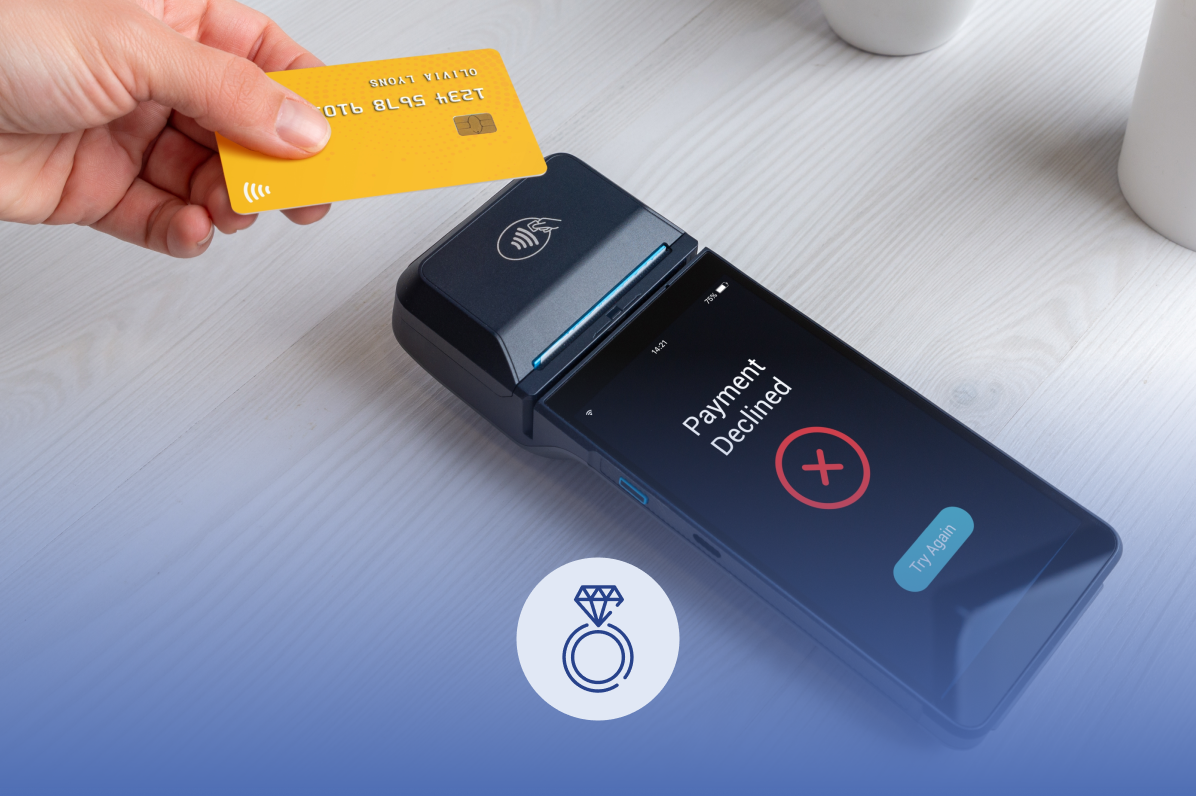
A customer spends forty minutes with you picking out a ring. They love it. They're ready.
Then the application comes back declined, and the whole thing evaporates at the counter — not because they couldn't pay,
but because you only had one lender to ask.
That's not a credit problem. That's a routing problem. And it's fixable.
One application. Many lenders. Instant decision.
Most independent jewelers run a single financing relationship. One application, one answer, one outcome. When that lender says no, the sale is over.
FormPiper replaces that single door with a routed stack. Your customer fills out one application. FormPiper routes it across a network of 25+ lenders — automatically, in sequence, in seconds — until someone says yes. The customer never re-applies, never re-enters their information, and never watches you make an awkward phone call.
What "all credit tiers" actually means
The phrase gets thrown around loosely. Here's the real structure behind it — six tiers, each one catching what the tier above it declined:
- Prime — the customers your current lender already approves.
- Near Prime — solid buyers with a thin file or one old blemish. This is the tier most jewelers lose entirely.
- Sub Prime — lower scores, real income, real intent to pay.
- Lease to Own — no credit needed; the merchandise secures the agreement.
- In-House — your own payment plan, on your terms, when you want to keep the margin.
- Credit Programs — recurring credit card payments, close the gap.
A single-lender setup covers one, maybe two of those. A full stack covers all six.
The math on a jewelry counter
Single-lender approval rates typically land in the mid-30s. Routed across a full waterfall, approvals climb well past 80%. On a $4,000 engagement ring, that difference isn't a percentage — it's the difference between the sale and the customer walking to the store down the street that had a second option.
And the customers you're currently declining aren't marginal. They're the near-prime buyer with one late payment from 2023, the young couple with no credit history yet, the cash-strong self-employed buyer whose file reads thin. Those are good customers. You just don't have a lender who can see it.
When every lender says no, you don't have to.
The last tier matters most. If the full stack comes back empty, FormPiper's in-house payment plans let you finance the purchase yourself — your terms, your schedule, your margin. No lender required. The sale closes.
What this looks like in your store
No new hardware. No second terminal. The customer applies on their phone or personal device, the routing happens in the background, and your associate sees one answer: approved, and by whom.
Frequently asked questions
Can one application really cover good credit and bad credit?
Yes. That's the entire point of a waterfall. The application is submitted once and routed sequentially through lender tiers from prime down to lease-to-own, so a single customer interaction covers the full credit spectrum.
Does applying hurt my customer's credit?
Checking a rate through the FormPiper flow does not affect the customer's credit score. All credit levels are invited to apply.
How many lenders does FormPiper route to?
FormPiper's network spans 25+ lenders across six tiers, including in-house payment plans for when the full stack declines.
Do I have to drop my current lender?
No. Your existing relationship can sit in the stack as your prime tier. FormPiper adds the tiers underneath it that you're currently missing.
Is there a fee per application?
No. FormPiper pricing is flat — no per-application or per-transaction charges.
Ready to stop turning customers away?
Get Your Custom Demo
See also: Why FormPiper · Calculate Your ROI